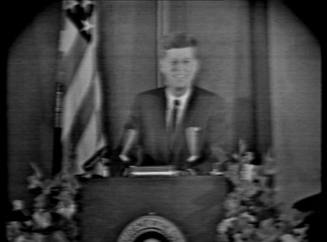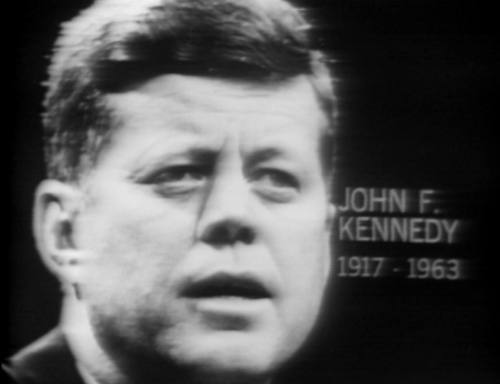
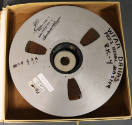
WFAA-TV tape: "Pres. Kennedy Master PK-4"
- Assassination
- Trade Mart luncheon
- Video
- Broadcast journalism
- Interviews
- Eyewitnesses
- Dealey Plaza
- Motorcade
- Television
- TV coverage
- Triple underpass
- Priests
- Last rites
- Live broadcast
- Kennedy, John F.
- Shipp, Bert
- Watson, Jay
- Haynes, Jerry
- Connally, John
- Newman, Bill
- Newman, Gayle
- Yarborough, Ralph
- Johnson, Lyndon B.
- Barker, Eddie
- Cochran, Ron
- Silverman, Ed
- Kennedy, Jacqueline
- Lord, Bill
- Morgan, Edward P.
- Kennedy, Edward
- Kennedy, Robert F.
- McCormack, John
- United Press International (UPI)
- Parkland Hospital
- ABC
- WFAA-TV
- Dallas Trade Mart
- KRLD News - Dallas
- CBS
- KRLD-TV
- Dallas
- New York
- Broadcast News
At the 28:30 mark on this WFAA-TV videotape, a photograph is shown nationwide on ABC News that was taken by Dallas Times Herald photographer Darryl Heikes at the corner of Harwood and Main Streets, approximately ten minutes prior to the assassination. Heikes, although a Times Herald staff photographer, was employed by United Press International, and his photographs were widely distributed via UPI news wire. The original photograph shown during this broadcast may be found in the Museum's online collections database: Image of presidential limousine turning onto Main Street in downtown Dallas – Works – The Sixth Floor Museum at Dealey Plaza. An oral history with photographer Darryl Heikes may be found here: Darryl Heikes Oral History – Works – The Sixth Floor Museum at Dealey Plaza.
The Heikes photo is notable as one of the earliest motorcade photographs to be featured on multiple networks. In addition to this appearance on ABC, the photo was shown nationwide on CBS a mere four minutes before Walter Cronkite's famous announcement that President Kennedy had died at 1:00PM Central Standard Time. The only other photograph of the Kennedy motorcade shown on CBS prior to this was an image taken by UPI photographer John Spann on Harwood Street. - Stephen Fagin, Curator
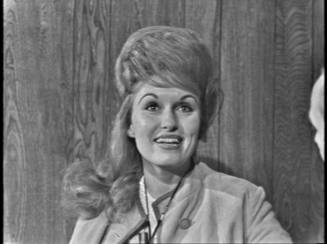
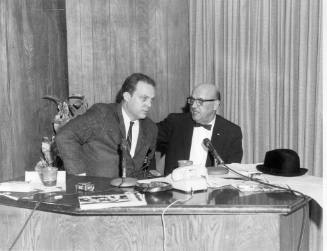
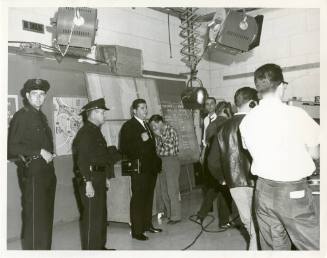
At the time of the Kennedy assassination in 1963, the WFAA Communications Center Studios was located at the corner of Young and Record Streets in downtown Dallas, approximately two blocks north of Dealey Plaza. As a result of their proximity, WFAA-TV/Channel 8 was the first local television station to break into programming with news of the shooting on November 22, 1963. Program director Jay Watson, himself an eyewitness to the assassination, interrupted the Julie Bennell Show, a local lifestyle and fashion program, approximately fifteen minutes after shots were fired in Dealey Plaza. In another first, Watson was the first to interview assassination eyewitnesses on the air after collecting the stunned Newman family in the plaza and rushing them to WFAA studios. The coverage that followed represents one of the most substantial archives of Kennedy assassination broadcast news footage in existence.
Amazingly, this historic news footage was nearly lost forever in the early 1980s. During that era, it was common for television stations to dispose of or recycle outdated broadcast tapes in order to save space and reduce costs. Prior to the age of widespread digital archiving, expensive videotapes were frequently erased and reused. Nearly twenty years after the assassination, a young WFAA-TV employee named John Sparks noticed all of the station's Kennedy tapes were boxed up and marked for disposal. Sparks, who had been part of the high school band that performed for President and Mrs. Kennedy in Fort Worth that fateful date, instantly recognized the historic significance of the material, and he singlehandedly rescued the tapes from destruction. The full WFAA-TV archive of Kennedy assassination news coverage was later donated to The Sixth Floor Museum at Dealey Plaza in 1998. Hear the inside story about how John Sparks saved this historic broadcast news footage in this 2025 Living History conversation: Living History from Fort Worth, November 22, 1963. - Stephen Fagin, Curator
The coverage of the Kennedys' arrival at Dallas Love Field (seen in part on this videotape from 13:29-18:21) may be watched in full via the Museum's online collections database here: WFAA-TV tape: "Pres. Kennedy Master PK-2 / Arrival at Love Field" – Works – The Sixth Floor Museum at Dealey Plaza. The original coverage is found on tape PK-2 (1998.010.0002) in the Museum's WFAA-TV Collection.
More tapes from the Museum's WFAA-TV Collection can be viewed on the Museum's online collection database here: Results – Advanced Search Objects – The Sixth Floor Museum at Dealey Plaza - Riley Harris, Collections Cataloger
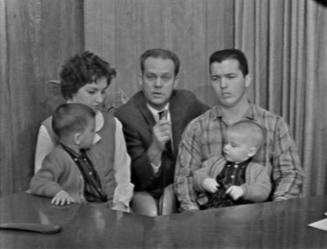
Standing on the north side of Elm Street, Bill and Gayle Newman, along with their two young sons, Billy and James Clayton, were the closest civilian eyewitnesses to President Kennedy at the moment of the fatal shot. They were also the first eyewitnesses to be interviewed live on television, appearing here with WFAA-TV program director Jay Watson within approximately fifteen minutes of the assassination. In this first significant interview, Bill Newman recalled hearing two shots fired and indicated that the shots sounded like they came from the "mall" behind him. In subsequent interviews, Newman has said that three shots were fired, though he has always maintained that he felt like the fatal shot came from "behind."
Bill and Gayle Newman recorded their first oral history with The Sixth Floor Museum in 1993 (Bill and Gayle Newman Oral History – Works – The Sixth Floor Museum at Dealey Plaza) and returned for a follow-up interview ten years later in 2003, which was later featured on C-SPAN (Kennedy Assassination: Bill and Gayle Newman, Part 1 | Video | C-SPAN.org). Following those interviews, Bill and Gayle Newman have generously participated in a number of public and educational programs at The Sixth Floor Museum over the years. Most notably, at the fiftieth anniversary of the assassination in 2013, the entire Newman family, including grown children Bill III and James Clayton, participated in a special Living History program, which may be seen here: Living History with The Newmans. - Stephen Fagin, Curator
A number of the individuals featured on WFAA-TV tape PK-4 have recorded oral histories with The Sixth Floor Museum at Dealey Plaza over the years. Among them are:
- (00:01) - Jerry Haynes, WFAA-TV personality: Jerry Haynes Oral History – Works – The Sixth Floor Museum at Dealey Plaza
- (02:00) - Bert Shipp, WFAA-TV assistant news director: Bert Shipp Oral History – Works – The Sixth Floor Museum at Dealey Plaza
- (04:05) - Bill Newman, assassination eyewitness: Bill and Gayle Newman Oral History – Works – The Sixth Floor Museum at Dealey Plaza
- (08:05) - Gayle Newman, assassination eyewitness: Living History with Gayle Newman
- (18:40) - Eddie Barker (voice), KRLD-TV news director: Eddie Barker Oral History – Works – The Sixth Floor Museum at Dealey Plaza
- (21:40) - Ed Hogan, WFAA-TV broadcaster: Ed Hogan Oral History – Works – The Sixth Floor Museum at Dealey Plaza
--Riley Harris, Collections Cataloger, and Stephen Fagin, Curator