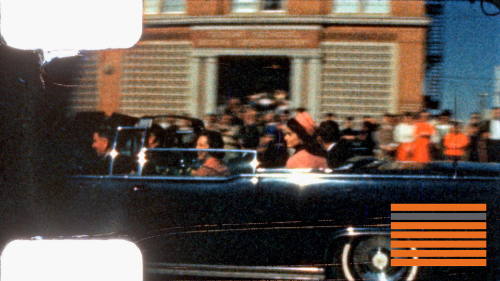
Tina Towner film
Camera Speed: approximately 18 fps
- Grassy knoll
- Eyewitnesses
- Dealey Plaza
- Home movie
- Motorcade
- Limousine
- Houston Street
- Elm Street
- Trip to Texas
- Towner, Tina
- Kennedy, Jacqueline
- Kennedy, John F.
- Connally, John
- Connally, Nellie
- Kellerman, Roy
- Greer, William R.
- Willis, Phil
- Willis, Linda
- Willis, Rosemary
- Willis, Marilyn
- Stubblefield, Robert
- Texas School Book Depository
- Dal-Tex Building
- Fort Worth Chamber of Commerce
- Dallas
- Two Days in Texas
- Home Movies
- Dallas Motorcade
- Towner Collection
- All Online Objects
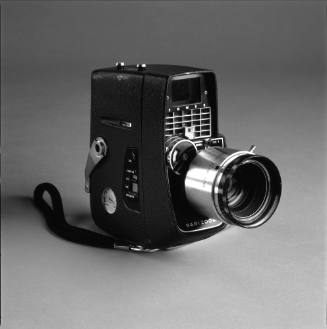
The true speed of this film remains elusive. It appears that when it is projected at the 1963 industry standard of 18 frames per second (fps), some sequences appear to move slightly more slowly than normal. When projected at 20 fps, all scenes seem to look normal. Unlike the Zapruder, Nix and Marie Muchmore cameras that filmed the assassination, the Towner camera was never measured - or even known about - during the original 1963-1964 investigation. It may be possible to make the camera run a little faster by holding down the "Run" button too close to the "Slow Motion" button (slow motion requires the camera to run at a faster-than-normal rate).
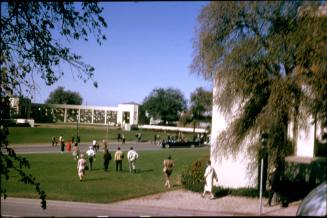
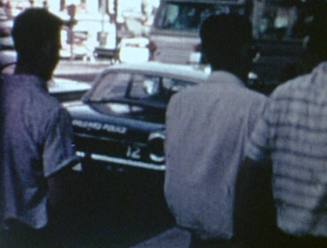
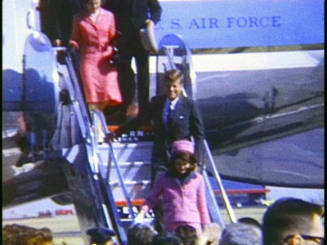
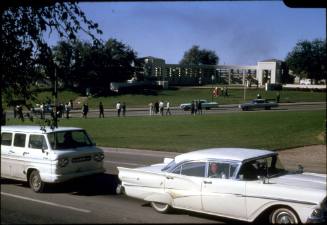
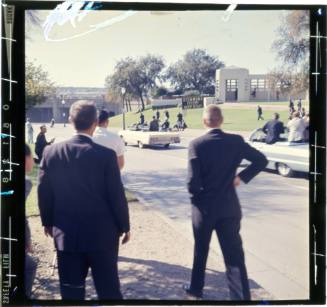
The Towner film shown here comes from a high-resolution full-frame digital scan made by the Library of Congress in 2011 for the National Geographic Channel program JFK: The Lost Bullet. The scan was digitally adjusted for color balance and brightness, scratch removal and to obtain a running speed of 20 fps.
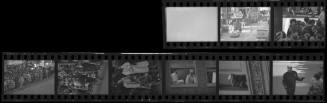
The original film stock was manufactured by the 3M Corporation and marketed by Sears under its Tower brand. By 2011, the film's emulsion was cracked and scratched after years of projection. Those marks were digitally removed. The auto-exposure feature of the camera may not have been operating correctly in 1963 for the entire film is under-exposed, making all of the scenes darker than they should be. All adjustments were made using Digital ICE (Digital Image Correction and Enhancement), a proprietary process of the Kodak Corporation. - Gary Mack, Curator