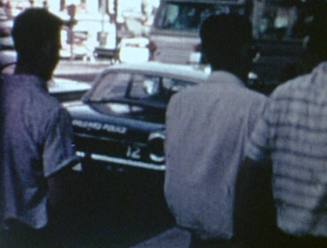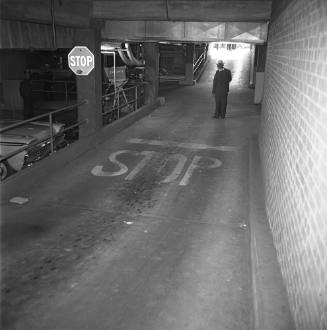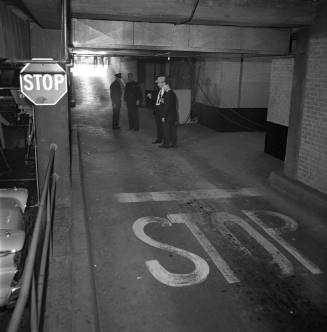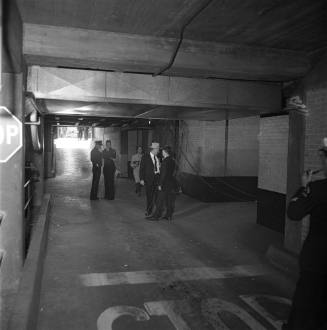
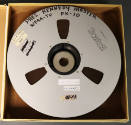
WFAA-TV tape: "Pres. Kennedy Master PK-10"
Duration: 58.5 Minutes
- Video
- Triple underpass
- Dealey Plaza
- Flowers
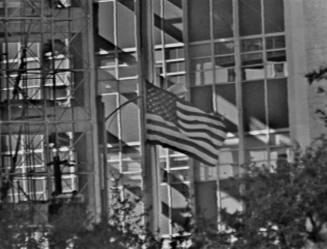
- Tributes
- Transfer
- Police
- Wounds
- Surgery
- Cardiac arrest
- Pistols
- Oswald, Lee Harvey
- Ruby, Jack
- Lord, Bill
- Walker, Bob
- Sharp, Roger
- Butler, George
- Perry, Malcolm O.
- Smith, Howard K.
- Good, Paul
- Decker, Bill
- Leavelle, Jim
- Shires, George Thomas "Tom"
- McClelland, Robert
- Jones, Ronald C.
- DeLaune, Gary
- Huffaker, Bob
- Lee, William F.
- Graves, L. C.
- Fritz, Will
- Martin, Murphy
- Maddox, Al
- Grant, Eva
- Carousel Club
- ABC
- WFAA-TV
- Dallas Police Headquarters
- Parkland Hospital
- Dallas County Jail
- Dallas County Sheriff's Department
- Texas School Book Depository
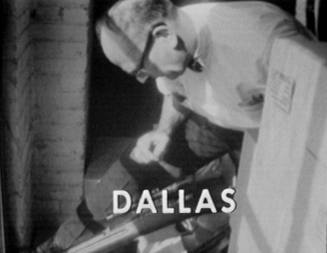
- Dallas
- Lee Harvey Oswald
- All Online Objects
- Jack Ruby
- Broadcast News
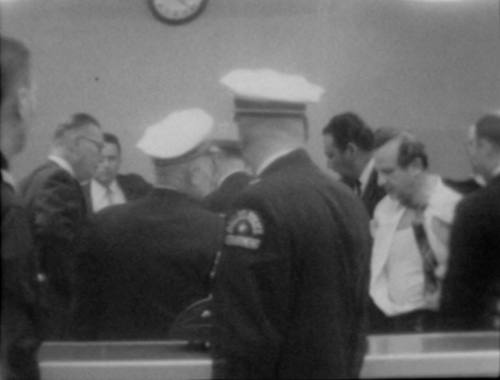
The footage of Jack Ruby shooting Lee Harvey Oswald, shown on this tape at 37:05, can be watched at a superior angle and in slow-motion in WFAA-TV tape PK-16 (1998.010.0016) at 00:15, via the Museum's online collections database: WFAA-TV tape: "Pres. Kennedy Master PK-16" – Works – The Sixth Floor Museum at Dealey Plaza.
The photograph shown on this tape of the moment right before Jack Ruby shot Lee Harvey Oswald (seen at 42:19) was taken by Dallas Morning News photographer Jack Beers (1994.003.0120). A print of the photograph may be viewed here: Photo of Lee Harvey Oswald moments before he was shot by Jack Ruby – Works – The Sixth Floor Museum at Dealey Plaza. - Riley Harris, Collections Cataloger
A photograph of the floral arrangement left as tribute to President Kennedy, seen on this tape at 4:49, may be found on the Museum's online collections database here: Image of memorial flower arrangements in Dealey Plaza on November 27, 1963 – Works – The Sixth Floor Museum at Dealey Plaza. Additional photographs of the many floral tributes left in Dealey Plaza during the assassination weekend can be viewed here: Results – Advanced Search Objects – The Sixth Floor Museum at Dealey Plaza. - Riley Harris, Collections Cataloger
Multiple individuals seen and/or heard on WFAA-TV tape PK-10 recorded oral histories with The Sixth Floor Museum at Dealey Plaza over the years. Among them are:
- (29:37) - U.S. Marine Corps Lt. William F. Lee (in white hat at head of casket): William F. Lee Oral History – Works – The Sixth Floor Museum at Dealey Plaza
- (31:39) - KLIF broadcaster Gary DeLaune (against chalkboard, over Good's shoulder): Gary DeLaune Oral History – Works – The Sixth Floor Museum at Dealey Plaza
- (33:30) - Parkland Hospital assistant administrator Steve Landregan (against chalkboard on right): Steve Landregan Oral History – Search Landregan (Objects) – Search – The Sixth Floor Museum at Dealey Plaza
- (36:54) - Dallas police detective Jim Leavelle (light-colored suit, handcuffed to Oswald): Search "James R. Leavelle" (Objects) – Search – The Sixth Floor Museum at Dealey Plaza
- (36:55) - Dallas police detective L.C. Graves (dark suit, next to Oswald): L. C. Graves Oral History – Works – The Sixth Floor Museum at Dealey Plaza
- (41:40) - KRLD-TV broadcaster Bob Huffaker (on left, behind officer): Bob Huffaker Oral History – Works – The Sixth Floor Museum at Dealey Plaza
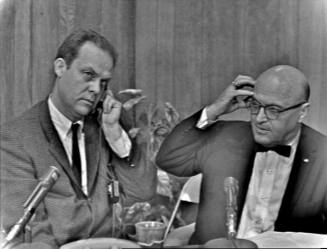
- (43:14) - ABC News broadcaster Murphy Martin: Murphy Martin Oral History – Works – The Sixth Floor Museum at Dealey Plaza
- (50:30) - Dr. Ronald C. Jones , Chief Surgery Resident (one of the gentleman behind Dr. Shires): Dr. Ronald C. Jones Oral History – Works – The Sixth Floor Museum at Dealey Plaza
- (50:30) - Dr. Robert McClelland, instructor in surgery at Parkland Hospital (one of the gentleman behind Dr. Shires): Dr. Robert McClelland Oral History – Works – The Sixth Floor Museum at Dealey Plaza
- (53:00) - Deputy Sheriff Al Maddox (in bow tie on right): Al Maddox Oral History – Works – The Sixth Floor Museum at Dealey Plaza
- Stephen Fagin, Curator, and Riley Harris, Collections Cataloger
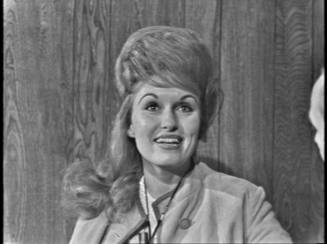
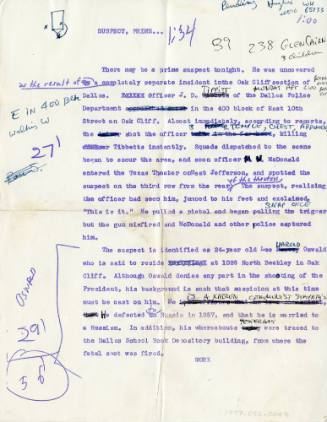
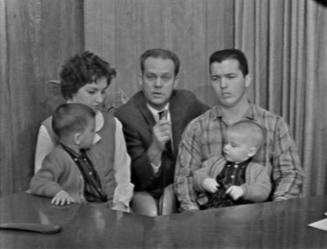
At the time of the Kennedy assassination in 1963, the WFAA Communications Center Studios was located at the corner of Young and Record Streets in downtown Dallas, approximately two blocks north of Dealey Plaza. As a result of their proximity, WFAA-TV/Channel 8 was the first local television station to break into programming with news of the shooting on November 22, 1963. Program director Jay Watson, himself an eyewitness to the assassination, interrupted the Julie Bennell Show, a local lifestyle and fashion program, approximately fifteen minutes after shots were fired in Dealey Plaza. In another first, Watson was the first to interview assassination eyewitnesses on the air after collecting the stunned Newman family in the plaza and rushing them to WFAA studios. The coverage that followed represents one of the most substantial archives of Kennedy assassination broadcast news footage in existence.
Amazingly, this historic news footage was nearly lost forever in the early 1980s. During that era, it was common for television stations to dispose of or recycle outdated broadcast tapes in order to save space and reduce costs. Prior to the age of widespread digital archiving, expensive videotapes were frequently erased and reused. Nearly twenty years after the assassination, a young WFAA-TV employee named John Sparks noticed all of the station's Kennedy tapes were boxed up and marked for disposal. Sparks, who had been part of the high school band that performed for President and Mrs. Kennedy in Fort Worth that fateful date, instantly recognized the historic significance of the material, and he singlehandedly rescued the tapes from destruction. The full WFAA-TV archive of Kennedy assassination news coverage was later donated to The Sixth Floor Museum at Dealey Plaza in 1998. Hear the inside story about how John Sparks saved this historic broadcast news footage in this 2025 Living History conversation: Living History from Fort Worth, November 22, 1963. - Stephen Fagin, Curator